
From plans to reality: Central Europe – more than half of the EU's nuclear renaissance.

Central Europe is emerging as one of the main hubs for the return of nuclear energy in the European Union. According to a GLOBSEC organization report titled “From Plans to Reality: The Future of Nuclear Energy in Central Europe,” published a few days ago, a new analysis shows that six countries in this region could provide more than half of the total new nuclear capacity the European Union will need by 2050.

According to estimates from the International Energy Agency (IEA), the European Union needs an expansion of nuclear capacity by almost 40 gigawatts to meet its climate targets by the mid-century. Detailed monitoring of projects in Poland, the Czech Republic, Slovakia, Hungary, Romania and Bulgaria shows that this region has 41 validated projects for building new reactors, with a total capacity of 24.3 gigawatts, thus significantly more than half. And if all planned blocks were built, they would cover as much as 45 percent of the total electricity consumption in these countries in 2025.
The gap between plans and construction: the greatest risk in the early phase
Despite the ambitious targets outlined in national energy and climate strategies, the GLOBSEC report points to a serious implementation risk:
- Only 10 percent of the total planned capacity is currently in the construction phase (Paks 5 and 6 reactors in Hungary and Mochovce 4 in Slovakia).
- One third of planned capacities are in an advanced preparatory phase (such as the Lubiatowo-Kopalino projects in Poland (although it has since started construction and is in very early stages of physical construction, but construction has begun), Dukovany 5 and 6 in the Czech Republic, Cernavodă 3 and 4 in Romania, and Kozloduy 7 in Bulgaria).
- The remainder (i.e., over half) is still only in the basic preparatory phase, where projects historically most often stall due to licensing and financing hurdles.
American technological leadership and complete absence of EU bidders
One of the most striking findings of the report is the complete shift in the geopolitical landscape of nuclear suppliers in the region.
American Westinghouse leads with 6.8 gigawatts of planned capacity through AP1000 reactors. They are followed by GE Hitachi (with planned projects in Poland) and the South Korean KHNP, which has been selected to build new blocks at Dukovany in the Czech Republic.
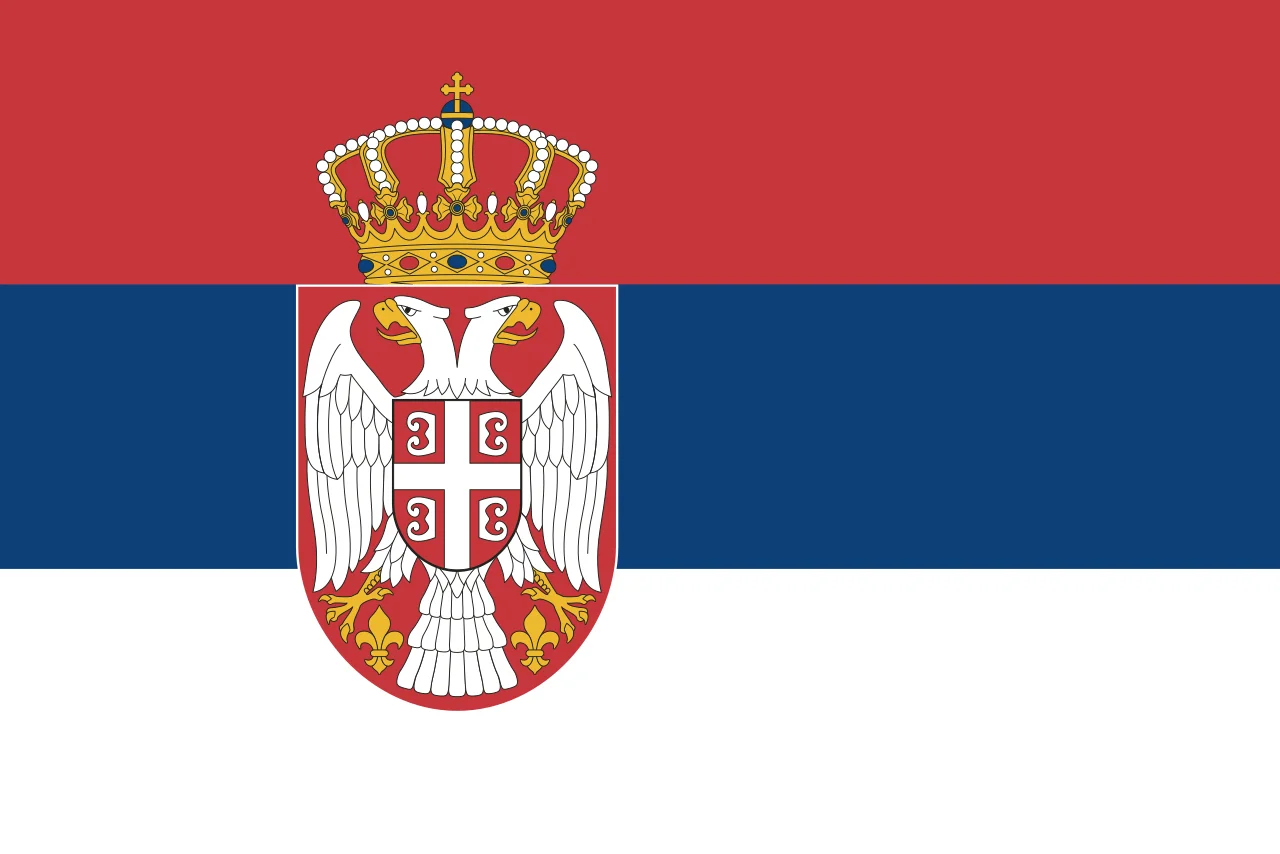
And among all validated projects in the region there isn’t a single design from EU countries. The French EDF participated in the tender in the Czech Republic, but lost to the South Korean competitor. It seems—if continuity continues (and soon there will be a somewhat more detailed piece on this, a topic of exceptionally important)—for now one of the few potential Central European projects that would rely on an European design would be the Serbian one, in which EDF with the EPR or EPR2 design is one of the potential suppliers. Of course, if we consider Serbia a part of Central Europe, which we don’t have to—and we simply note the porous, thin, and often politically directed borders of “Central Europe.”
Drastic drop in Russia’s share
And although the existing fleet in the region consists of 19 reactors (11.7 gigawatts) that are predominantly of Soviet design (VVER-440 and VVER-1000), Russian technology currently accounts for only 10 percent of new planned capacities (legacy projects in Slovakia that are just now entering operation and Paks II in Hungary).
Small modular reactors (SMR): limited progress in practice
Although small modular reactors (SMRs) are mentioned in strategic documents of all six countries, they have not yet advanced in practice. Of the total capacity, SMRs account for 6.2 gigawatts (about a quarter), but all validated SMR projects are in the very early stages of preparation (Romanian NuScale project in Doicești with readiness rating 3/10, and Polish GE Hitachi and Rolls-Royce projects with ratings 2/10 and 1/10). We add that these may also be quite optimistic assessments given that they rely on overly optimistic readiness estimates provided by the companies that produce them.
And ultimately, the economic viability of SMR depends directly on serial production (“fleet effect”), which is not visible in the region or globally—currently only one SMR reactor is in “serial production”.
Recommendations for successful delivery
The report offers 17 key recommendations divided into four areas:
- Strategy and planning: establishing a cross-party consensus (modeled on the Czech cross-party body) so political changes do not interrupt projects that last up to two decades, and aligning construction timelines among neighbors to avoid poaching of scarce skilled labor.
- Regulatory framework: increasing funding for national regulators before formal licensing requirements arise, introducing legal deadlines for issuing permits, and ending the practice of imposing excessively conservative national requirements (the so-called “gold-plating” – exceptionally evident in the United Kingdom, where irrationally high safety standards drive up the costs of two new projects).
- State aid and financing: GLOBSEC urges the European Union and Eurostat to clarify in advance how nuclear financing models (that exceed 5% of a country’s GDP) will be treated in relation to public debt and deficit rules.
- Workforce and regional cooperation: timely reform of labor and immigration legislation for foreign experts and the creation of permanent regional channels for exchanging experience.
Comment
Of course – we are particularly glad that Central Europe is highlighted as, in a sense, a “leader” of Europe – and we add that this recognition has finally arrived. Certainly – there are several lessons here, but let’s focus on one – EPR. The French EPR reactor design is “reengineered,” there is no doubt, wherever it is built, its price is enormous, certainly far higher than any other competitor; in the United Kingdom, the prices for two EPRs that are currently being built are already completely ridiculous. What EDF must do is find a way to reduce the price, it really must.
As for Serbia – more or less it is clear that EDF is potentially the only partner with whom this deal could be concluded – Rosatom is suitable and advantageous in many respects, but geopolitically it will be hard for us to be granted full autonomy in decision-making. KHNP has almost certainly arranged with Westinghouse to share the market, so it won’t even bid, and adopting Westinghouse would require very serious domestic-built expertise (due to certain historical-technological circumstances, not going into it now). In other words – on the horizon we potentially have only EDF’s EPR (or EPR2). And it wouldn’t hurt to start working on our own capacities to emancipate from the restrictions we have somewhat imposed on ourselves.
And you can read the entire report here.
S.A.
Other News

KHNP terminated negotiations with the Daewoo-Doosan consortium regarding the construction of new reactor blocks at Dukovany.
The South Korean company Korea Hydro & Nuclear Power (KHNP) has officially terminated contract n...

European fuel cycle for molten-salt-cooled reactors
A Dutch-French company that is developing Thorizon molten-salt reactors and the European uranium enr...

Turkish oil refiner to consider SMR deployment
Scheduled to take about one year, the study is intended to examine various US small modular reactor...

Nuclear fuel delivered for Bangladesh's second unit
The delivery was by cargo plane and then by road. The fuel assemblies were produced at the Novosibir...

Comments
No comments yet. Be the first!
Leave a comment